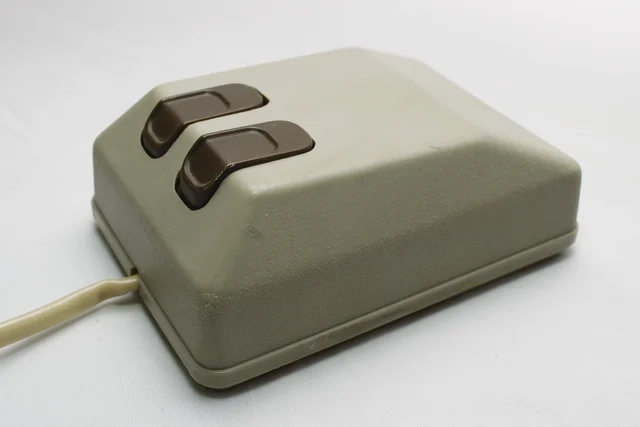
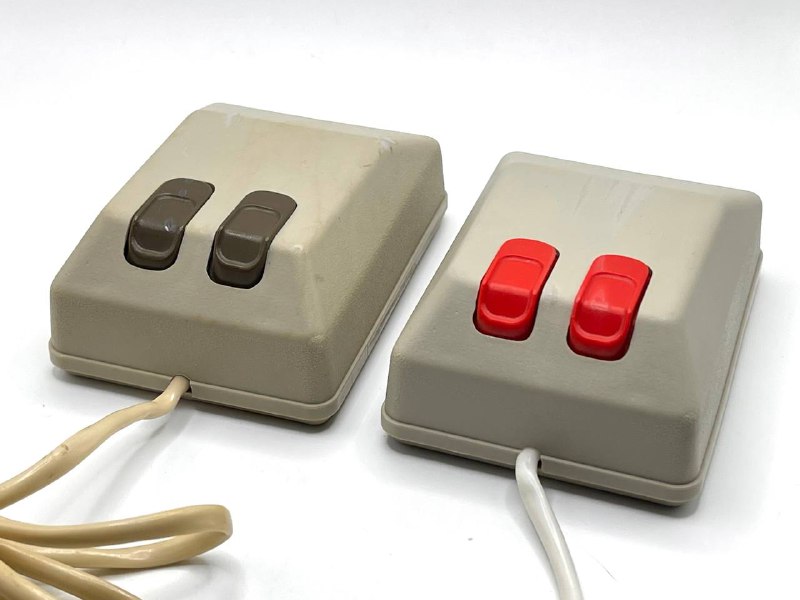
MM 8031 Korvet
A mouse for the school Korvet system: quadrature signals and nine conductors.
MM stands for “mouse manipulator” =)
Korvet was created in 1985 by a group at Moscow State University's Institute of Nuclear Physics to automate physics experiments. The project quickly attracted official attention, and in 1987 mass production began for Soviet schools as an educational computing system.
The system included a PK 8020 teacher's computer and up to fifteen PK 8010 student terminals on a local network. A mouse would expand its graphics capabilities, for instance in drawing programs.
The original plan was to connect a conventional Microsoft serial RS-232 mouse. In practice, a custom mouse was designed, connecting directly or through an adapter to the expansion ports.
The main hypothesis is a shortage of UART chips, which would have been required in every mouse. This wasn't unique: Commodore Amiga and Atari mice used the same logic, and the mouse was compatible with them.
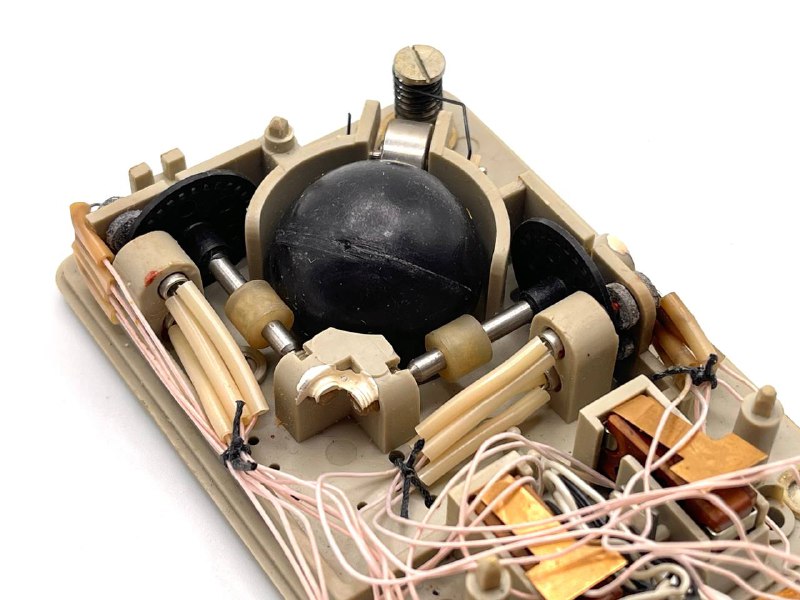
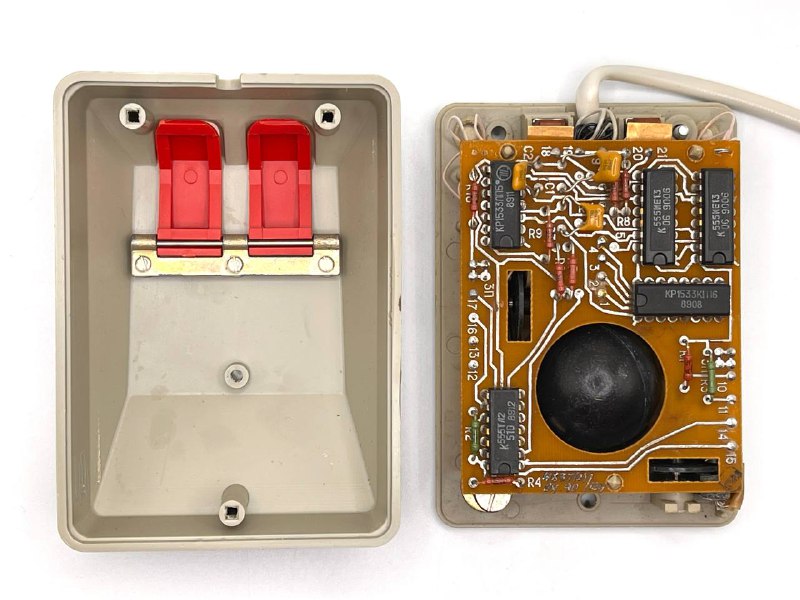
The MM 8031 transmits nearly raw sensor signals: direct quadrature pulses on four lines. That simplified development, but required more wires and special pulse-reading circuitry in the computer. Including two buttons, the cable had nine conductors.
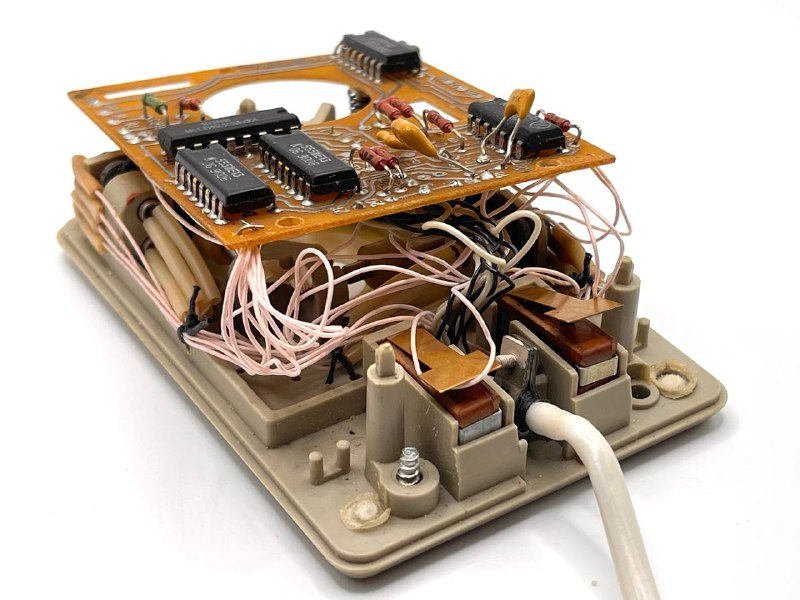
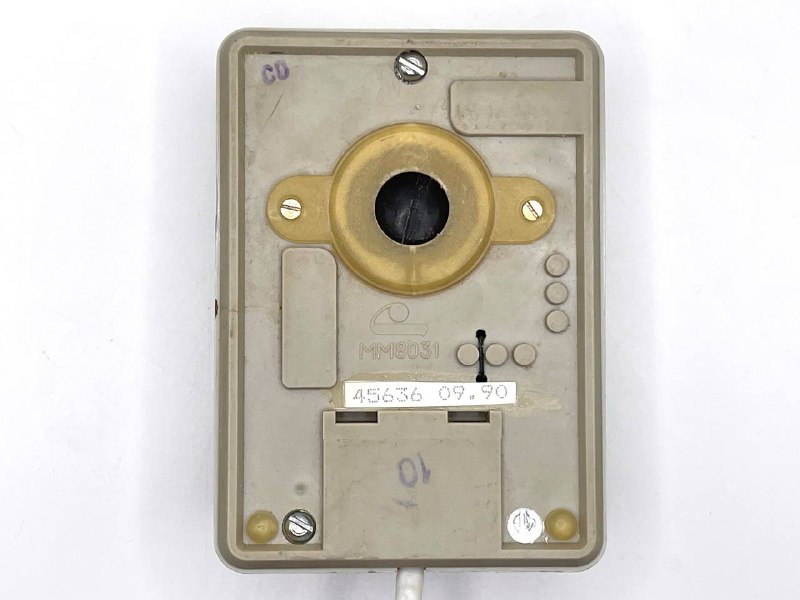
Its cable management is delightfully eccentric. Wires were tied to the case with thread through dedicated holes.
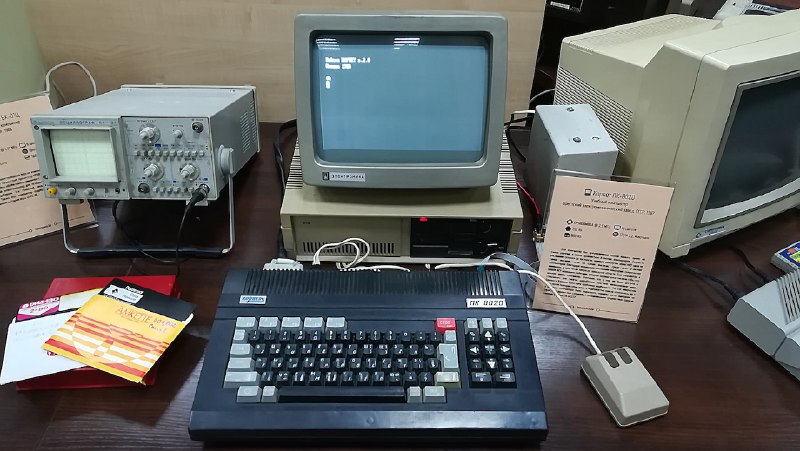
More than 500,000 computers were planned, perhaps making it a Russian BBC Micro. The general situation in the 1990s meant it didn't happen.