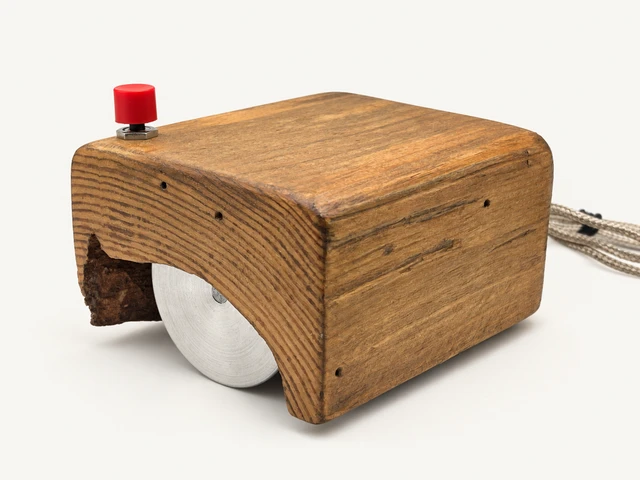
The Engelbart mouse prototype
The story of the first mouse and the search for parts to build a faithful replica.
The story of the computer mouse is usually told something like this: Douglas Engelbart invented it, demonstrated it at the Mother of All Demos in 1968, and then the whole world started using mice.
The reality was a little more complicated — and more interesting.
In the early 1960s, a computer was not yet a personal device on a desk. For most people, computing meant punched cards, batch processing, operators, allocated machine time and a very long feedback loop: prepare a job, hand it to the machine, wait for the result, then look for the mistake. At Stanford Research Institute, Engelbart was pursuing almost the opposite idea: a computer should be an interactive environment for augmenting human thought, rather than a calculator behind a wall.
That environment was called NLS, the oN-Line System. At the time, “online” did not mean the internet in its modern sense, but working with a computer in real time, through a screen, commands and immediate feedback. NLS was a complete system for text, links, structured documents, collaboration, command input, screen editing, video communication and navigation through information — a precursor to today’s operating systems, where people need to point at objects on a screen, select text, move through structures and control complex objects.
When the problem first arose, nobody knew which device would work best. The laboratory tried light pens, joysticks, the Grafacon — an ancestor of the graphics tablet — knee-operated devices, head- or nose-controlled options and other experimental pointing devices.
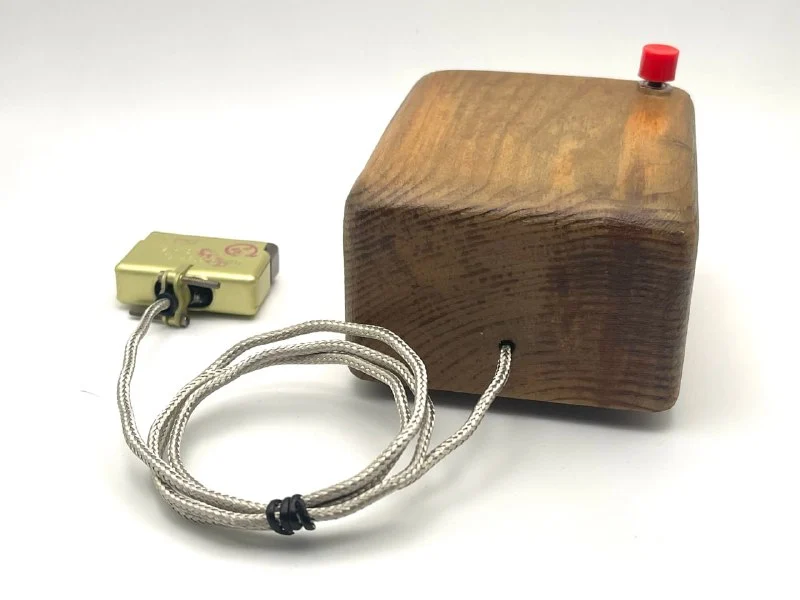
The first physical mouse was built not by Engelbart himself, but by engineer Bill English. Engelbart conceived the principle and set the task; English built the device, helped develop its engineering and became one of the first people to use a mouse. The Computer History Museum’s record of the original wooden prototype explicitly credits Douglas Engelbart as its creator and Bill English as its builder.
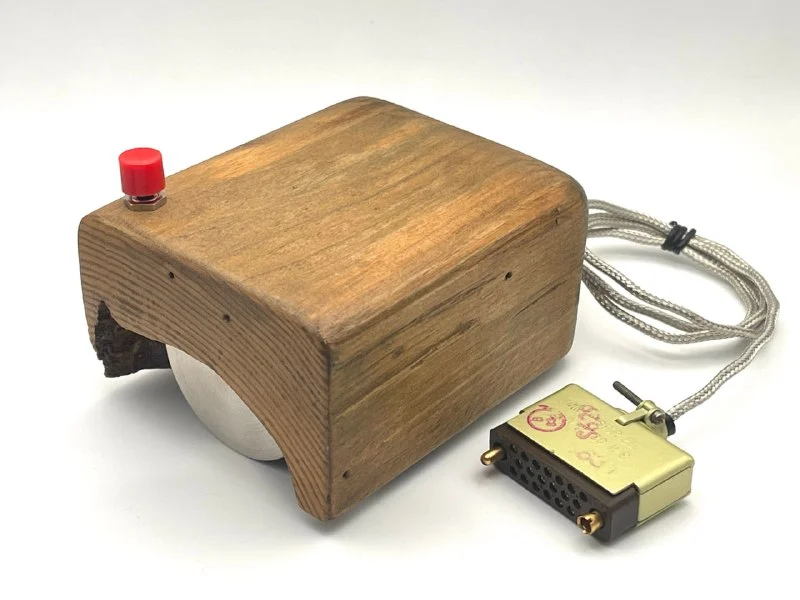
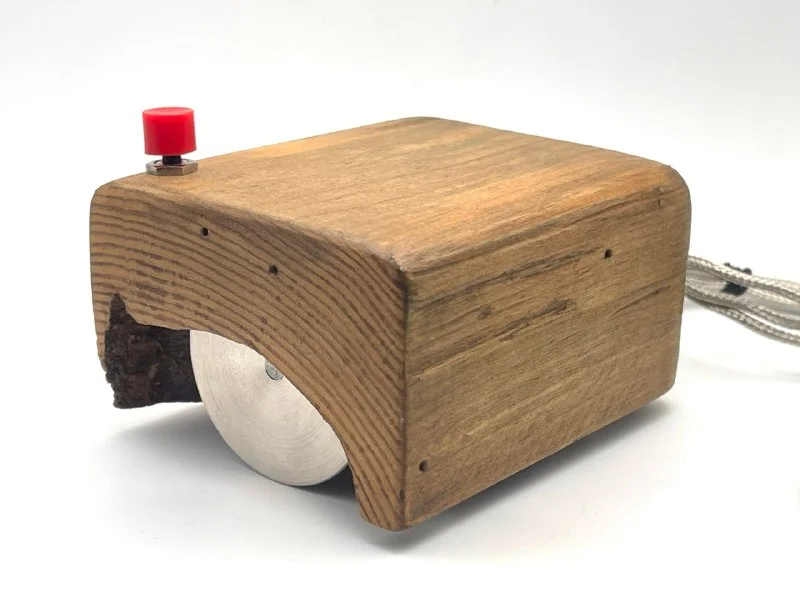
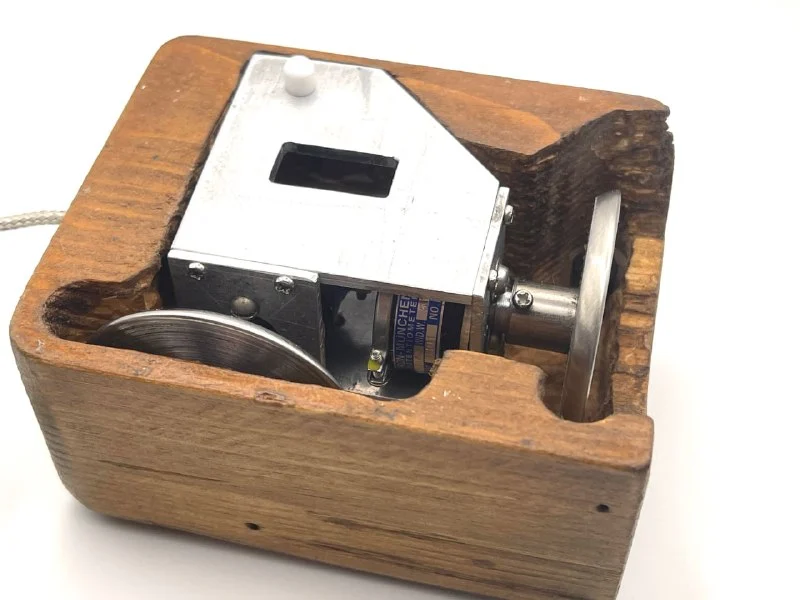
The first mouse used two wheels mounted at right angles. One handled movement along the X axis, the other along the Y axis. Each wheel was mounted on the shaft of a potentiometer, and the mechanism was enclosed in a wooden case measuring approximately 2 × 3 × 4 inches, or 5 × 7.6 × 10 centimetres. The Computer History Museum describes them as knife-edge wheels: one rolled in its own direction while sliding sideways, with the other doing the same along the other axis.
The word “mouse” does not appear in Engelbart’s patent at all. Its legal title was X-Y Position Indicator for a Display System.
By 1968, the mouse had evolved. At the Mother of All Demos, Engelbart demonstrated a more mature, three-button version for NLS, rather than the earliest one-button wooden prototype. It was used alongside an ordinary keyboard, a five-key chord keyset and a screen-based system.
Besides the original and an “almost original” replica also made by English, I managed to find information about three further replicas in the US and Europe.
The hardest part of making a replica is finding original components, or at least something close to them. In our case, that meant potentiometers, a button, a connector and a cable. Searching for all of these around the world took me about six months. Building the replica becomes an investigation: patent drawings, photographs of the underside, museum measurements, technical papers, comparisons between early and later versions, a search for period components, and constant checking of where fact ends and reconstruction begins.
And, of course, I found someone who painstakingly recreated both the construction and appearance.
Thank you, Dima!
This mouse and others will soon be on display in Moscow. More details later. Stay tuned!
Translated from the original Russian post.
Original post on Telegram ↗Replica in the original catalogue