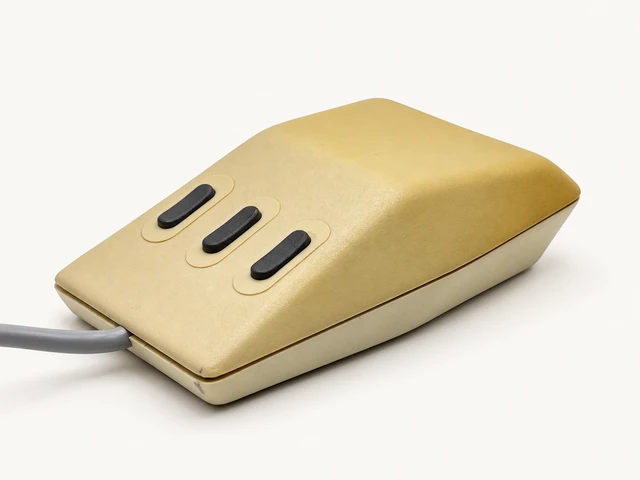
Penny & Giles M3/100
Brass mechanics, reflective encoders and a Sinclair QL conversion.
Also known as the mouse for the Acorn 500.
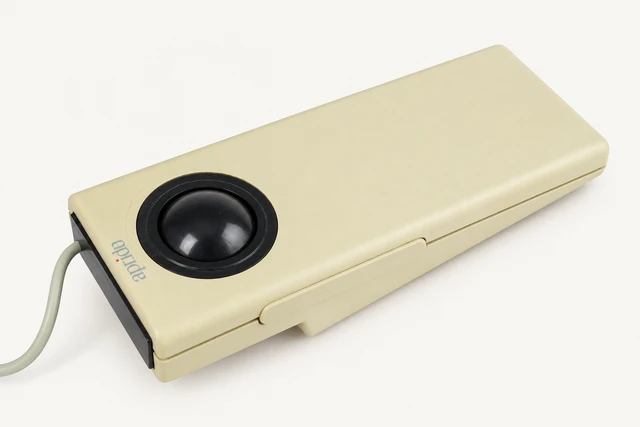
P&G mainly specialised in military and OEM equipment. Unlike Logitech, Depraz or Mouse Systems, they left no trace of their identity inside or outside their products. Working out that they also made this Apricot trackball takes some historical digging.
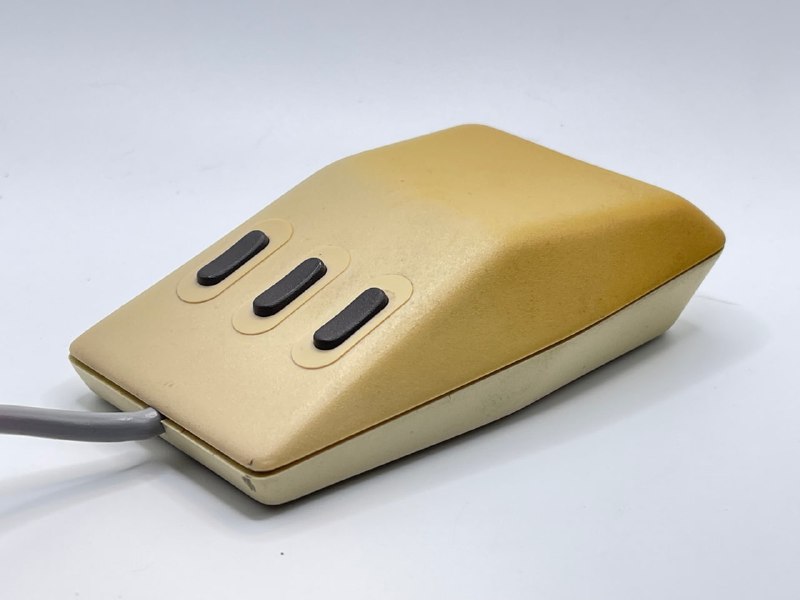
Almost everything about this mouse deserves attention.
The shape is unlike anything else. The buttons are little rockers for your fingers: press in the middle or at either end and they work. There is a fabric-like insert to help it glide. I can imagine how hard that was to clean.
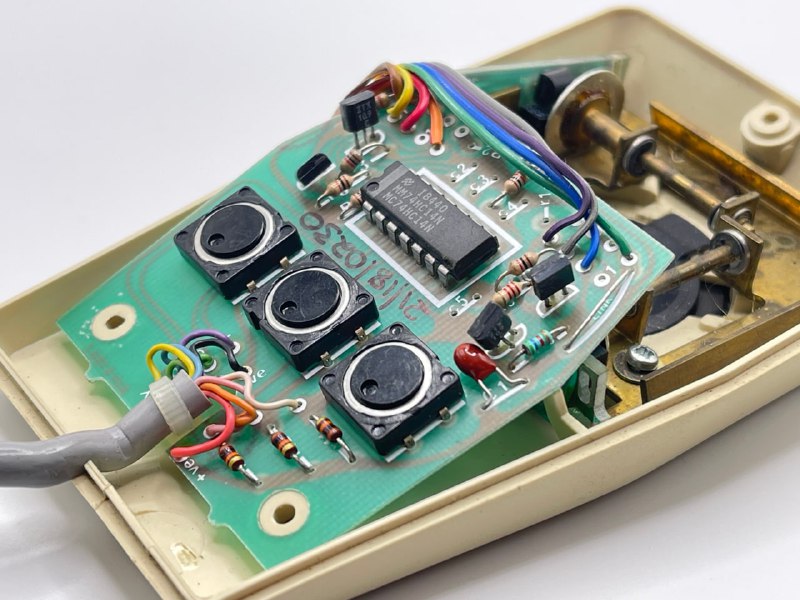
The mechanism is brutal: a thick brass-sheet frame, bent in places to mount the boards and rollers. The encoders are unusual too. Instead of passing through a disc, the light reflects off a mirrored disc onto a photodetector. Painted black stripes interrupt it.
Its only known application was the Acorn 500, which was never sold. It was used internally for software development and formally never left the prototype stage.
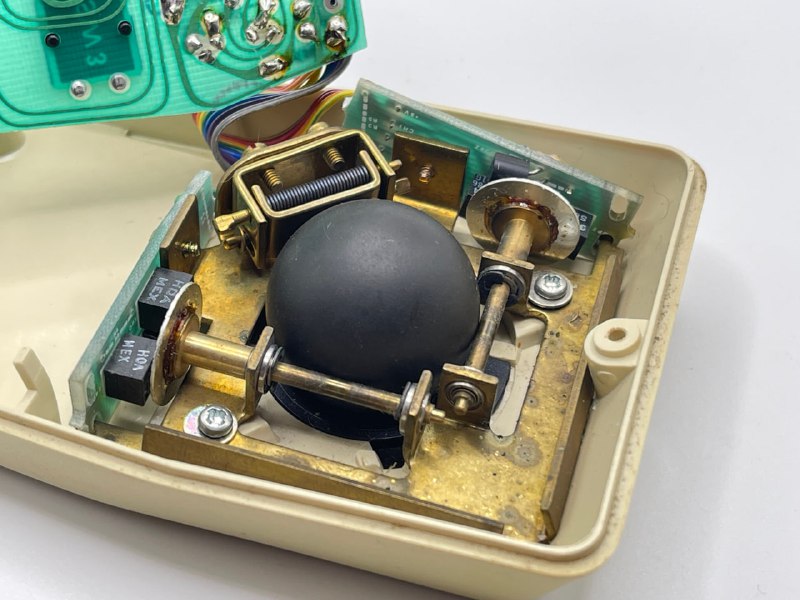
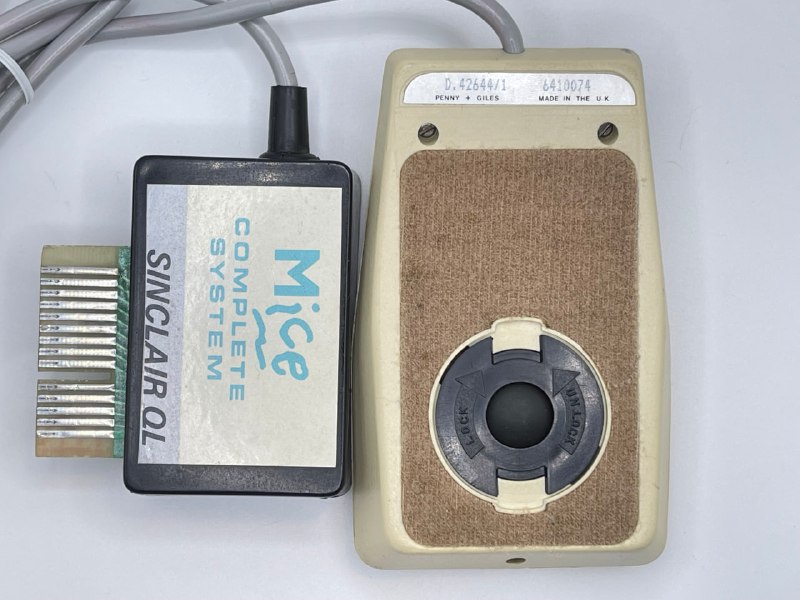
That is also where the designation M3/100 comes from, although it appears nowhere on the mouse itself. The case carries the rather alarming D.42644/1, hardly a marketable model name.
My example has an interface modified for the Sinclair QL. It seems this was done later by Mice Complete System, which developed and sold Sinclair connectors and adapters. The mouse plugged directly into the memory expansion, writing straight into the machine's brain.
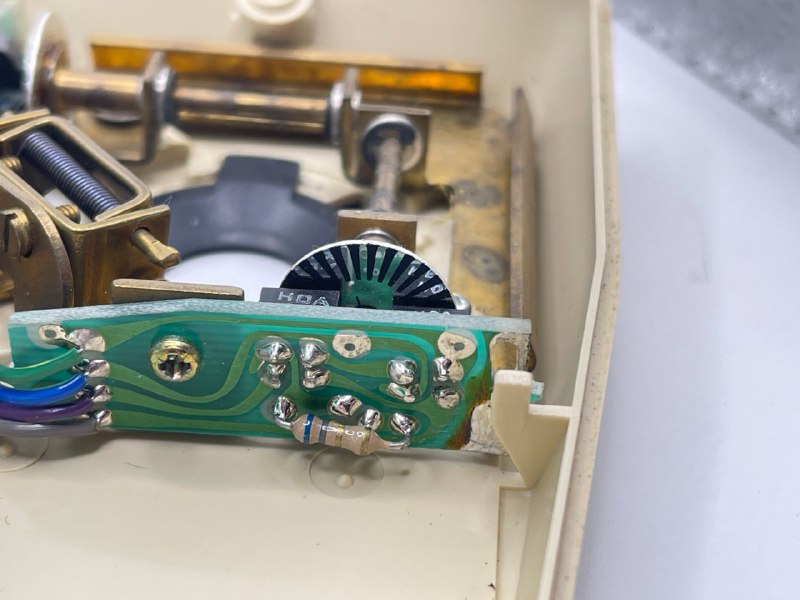
A very neatly executed modification.